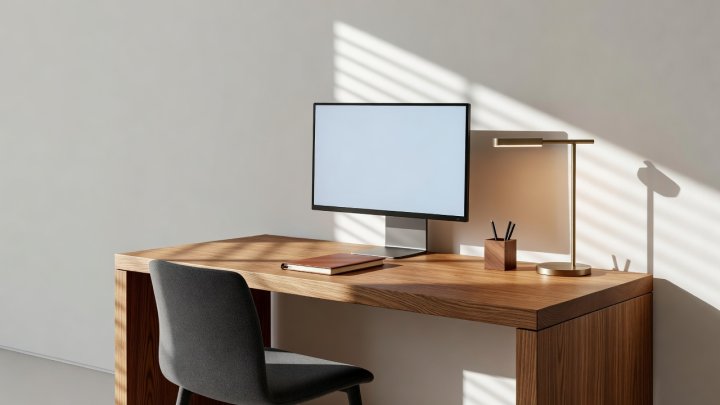
Home Office Anthropometrics & Desk Clearances
Sedentary intellectual work extracts an immense musculoskeletal toll when clearances are compromised. Squeezing a desk into an alcove without calculating task chair pushback creates persistent neck compression, carpal impingement, and visual fatigue.
Review Desk Metrics
Primary Desk Anthropometric Coordinates
Chair Pushback & Roll Radius
Allocate forty-two to forty-eight inches behind the front working edge of the desk. Ergonomic task chairs on casters require this radius to recline, turn, and stand without striking credenzas or rear walls.
Knee Well Dimensions
The unobstructed cavity under the desk must measure at least twenty-four inches in width, twenty-eight inches in height, and twenty inches in usable depth. Drawers placed directly above thighs cause spinal torsion.
Focal Viewing Depth
Ensure twenty to thirty inches between eye surface and display face. Shallow desks measuring under twenty-four inches force displays too close, driving ocular fatigue and neck craning.
Visual Field and Dual Display Ratios
For double-display setups, angle secondary monitors inward at twenty to thirty degrees to align with natural head rotation. Avoid panning your neck beyond forty-five degrees to review peripheral tasks.
Desk height should position elbows at a ninety-degree bend with forearms resting parallel to the floor, generally twenty-eight to thirty inches above finished floor level for standard adult stature.
Examine Technical FAQ